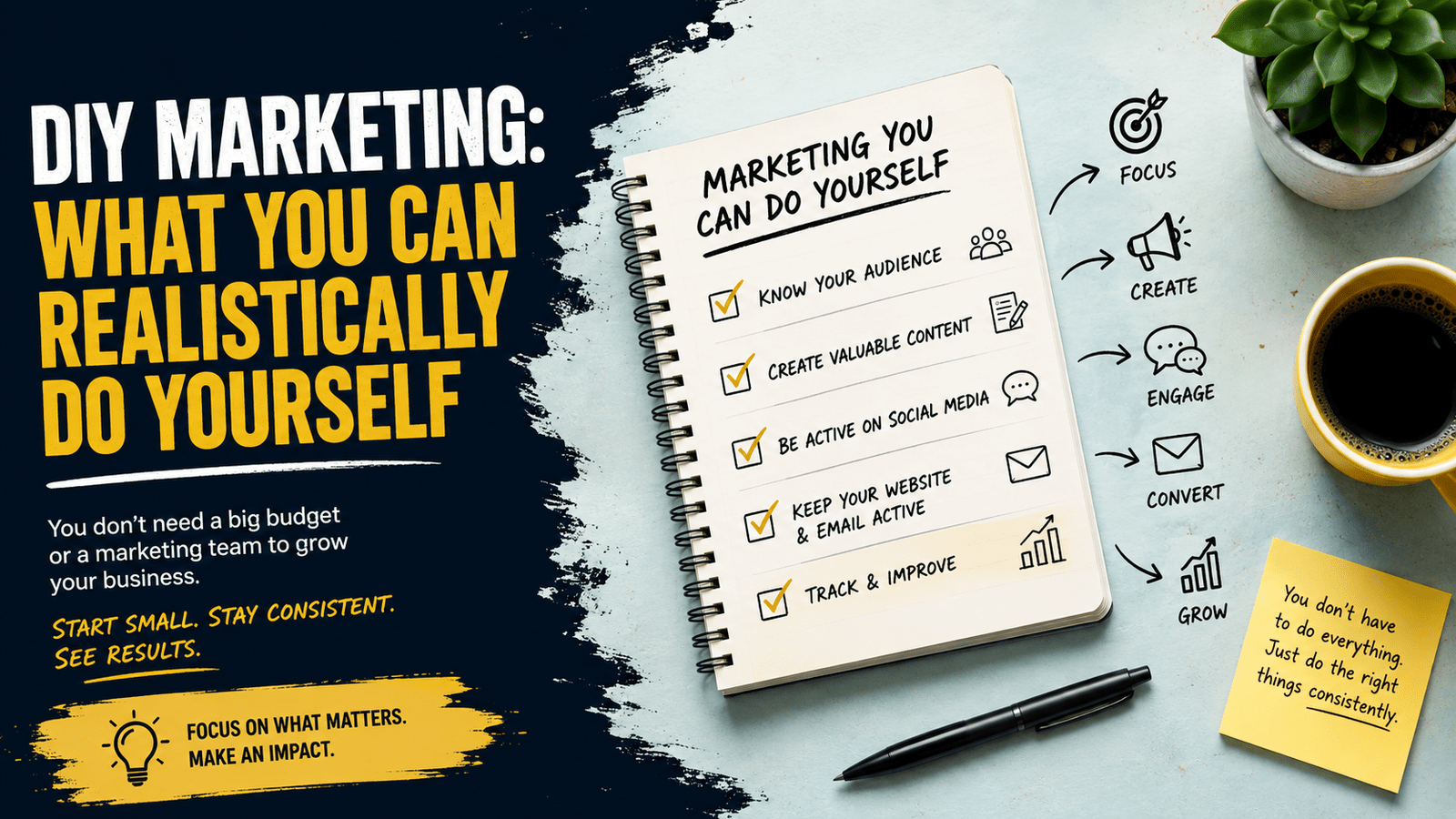
You do not need a large marketing budget or a full-time marketing team to start promoting your business. In fact, many small businesses can handle a surprising amount of their marketing themselves. But before you start, it’s worth understanding the common marketing mistakes startups make and how to avoid them.
The key is knowing what you can realistically manage and where your time is better spent elsewhere.
1. Know your audience
Before creating content or posting on social media, understand who you’re trying to reach.
- Define your ideal customer.
- Identify their biggest problems.
- Understand what questions they ask.
- Focus your message on how you solve those problems.
A clear audience makes almost every other marketing decision easier.
2. Create useful content
You don’t need to become a professional writer or create something every day.
Start with:
- Answering common customer questions
- Sharing helpful tips
- Creating short how-to posts
- Explaining common mistakes
- Turning customer conversations into content
One useful piece of content can often be repurposed into multiple social posts or an email.
3. Maintain a consistent social presence
You can manage basic social media yourself, especially when you’re starting out.
- Pick one or two platforms where your customers actually spend time.
- Create a simple posting schedule.
- Share useful information rather than constantly promoting your business.
- Respond to comments and questions.
Consistency matters more than posting constantly.
4. Keep your website and email marketing active
You can handle many basic website and email tasks yourself.
- Keep important information current.
- Add useful content regularly.
- Build an email list.
- Send occasional updates, tips or offers.
- Make sure visitors have an obvious way to contact you.
5. Track what is working
You don’t need an advanced analytics department to start measuring results.
Track basic numbers such as:
- Website visits
- Leads and inquiries
- Email signups
- Social engagement
- Which content generates responses
The goal isn’t to do everything yourself. It’s to do the things you can do well, consistently, and know when something has become too time-consuming or specialized to manage alone.